From Vancouver to Mexico City - The Most Iconic Venues of FIFA World Cup 2026™
Published on
by Laura Lange
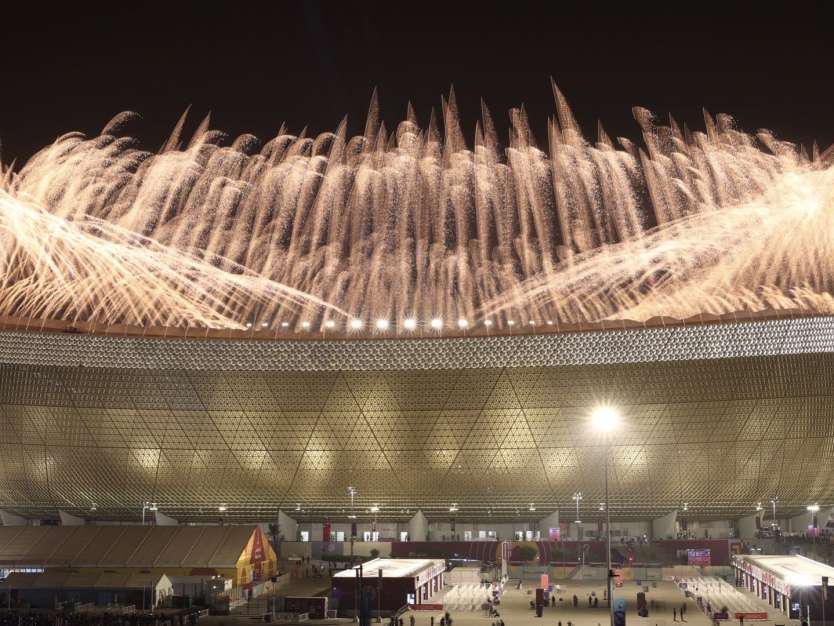
The FIFA World Cup 2026™ will make history for many reasons. It’s the first time three countries will play host and the first tournament that will feature 48 participating nations. But just as important, the venues themselves will make waves too. These are places that are more than stadiums. They are stages, journeys, emotions – and for fans, companies, and brands, the key to unforgettable experiences.
From the Pacific to the Atlantic, from technological innovation to cultural diversity, this FIFA World Cup™ is not only a sporting event but also the most geographically captivating the globe has ever seen.
In this Insight:

Sport creates excitement. Places make it tangible. The FIFA World Cup 2026™ demonstrates how destination, stadium architecture, and fan experience merge to create a stage far beyond the match itself.
The 16 host cities across Canada, Mexico and the USA that will host the matches this summer form a kaleidoscope of culture, lifestyle, technology, nature, and sports history. But these locales are not just match locations, they are culturally diverse as no two of these cities are alike.
They represent a wide spectrum of differences, all while serving as magnets for fans from around the globe. Better yet, each city has a unique opportunity for distinguished hospitality experiences and brand platforms. We provide insight into some of the most iconic FIFA World Cup 2026™ venues below.

BC Place Vancouver, Canada: Nature Meets Football Passion
Few North American cities blend natural beauty and urban life like Vancouver. Set along the Salish Sea with the North Shore Mountains as a dramatic backdrop, the city offers a rare mix of coastal living and alpine access. Beaches, parks, ski resorts, and mountain bike trails are all within minutes of downtown, reinforcing Vancouver’s reputation for outdoor living and exceptional quality of life.
Vancouver is also one of the most diverse cities in the world, home to more than 200 ethnicities and countless languages. This multicultural character, combined with Canada’s highest population density and a highly walkable downtown core, makes it an ideal host for major international sporting events.
At the center of it all is BC Place Vancouver, one of Canada’s most iconic stadiums. Opened in 1983 and renovated ahead of the 2010 Winter Olympics, BC Place hosted the FIFA Women’s World Cup 2025™ Final, where the United States defeated Japan. The stadium is also home to the six-time CFL champion BC Lions. Located on the shores of False Creek in downtown Vancouver, BC Place places fans and partners within walking distance of hotels, dining, entertainment, and waterfront attractions.
1983
opened
54,000
capacity
7
matches
.png)
Los Angeles Stadium, USA: Hollywood Flair Meets Sports Glamour
Los Angeles is one of the world’s most iconic cities, defined by its entertainment legacy, global influence, glitz, glamour, and year‑round sunshine. From the Hollywood Hills to the beaches of Santa Monica, the city’s blend of fame, culture, and lifestyle makes it one of the most recognizable destinations on the planet. As the Entertainment Capital of the World, Los Angeles has long served as a global center for film, music, and the arts.
Sport is deeply woven into the city’s identity too. Los Angeles is home to numerous top‑level professional franchises, including the Dodgers and Lakers, and has hosted the Summer Olympic Games twice (1932 and 1984), with a third edition set for 2028. The city has also staged multiple Super Bowls across historic venues such as the Memorial Coliseum and the Rose Bowl.
For the FIFA World Cup 2026™, matches will be played at Los Angeles Stadium, a state‑of‑the‑art venue located in Inglewood. Opened in 2020, the place is one of the premier stadiums in the world and will host multiple tournament matches, including two United States group‑stage games, placing Los Angeles at the center of the global football spotlight.
2020
opened
70,000
capacity
8
matches
.png)
New York New Jersey Stadium, USA: The Beating Heart
The Greater New York area is one of the world’s most influential metropolitan regions, home to more than 20 million people and a global center for finance, business, media, and sport. Wall Street anchors the U.S. financial industry with the New York Stock Exchange and NASDAQ, while the Port of New York and New Jersey serves as a critical gateway to global trade.
Across the Hudson River sits the New York New Jersey Stadium, home to the NFL’s Jets and Giants and a venue known for passionate fans and world-class hospitality. With its concentration of wealth and business opportunity, the New York–New Jersey region was a natural choice to host the FIFA World Cup 2026™ Final on July 19, an apt stage for a city many call 'The Capital of the World.'
2010
opened
82,500
capacity
8
matches

Mexico City Stadium, Mexico: History Meets Football Legend
Mexico City is the largest city in North America in terms of area and one of the world’s most historic capitals. Founded in 1325 by the Mexica people as Tenochtitlan, the city blends ancient history with modern urban life. Remnants of the original city remain in the historic center near the Zócalo, an area that will draw fans from across the globe during the FIFA World Cup 2026™.
Football is central to Mexican culture, and Mexico City sits at the heart of that passion. Home to Club América, the country’s most popular and successful club, the city hosts some of world football’s most intense rivalries. Mexican supporters are renowned for their energy, loyalty, and atmosphere, making the city one of the most iconic football destinations on the planet.
That legacy is embodied by Mexico City Stadium, which will host the opening match of the FIFA World Cup 2026™. Located 7,200 feet above sea level, the stadium is one of the most challenging venues in international soccer. Mexico City Stadium is the only stadium to host two FIFA World Cup™ Finals (1970 and 1986) and witnessed legendary moments from Pelé and Diego Maradona, cementing its status as one of football’s most storied venues.
1966
opened
83,000
capacity
5
matches
Conclusion
The FIFA World Cup 2026™ is more than a tournament. It’s a journey through 16 different locales, each with their own distinct identity and flair. You can be a part of it and remember this historic event forever. You will tell your children and grandchildren that “I was there.” With that in mind, each city offers unique opportunities for hospitality and brand activations. Join the atmosphere of the biggest event in the world and discover hospitality packages now – and become part of the journey.
Find all 16 venues of the FIFA World Cup 2026™ below.
BC Place Vancouver, Canada
Stadium capacity: 54,000
Groupstage: 5 matches
Round of 32: 1 match
Round of 16: 1 match
Toronto Stadium, Canada
Stadium capacity: 45,000
Group stage: 5 matches
Round of 32: 1 match
Mexico City Stadium, Mexico
Stadium capacity: 83,000
Group stage: 3 matches
Round of 32: 1 match
Round of 16: 1 match
Guadalajara Stadium, Mexico
Stadium capacity: 48,000
Group stage: 4 matches
Monterrey Stadium, Mexico
Stadium capacity: 53,500
Group stage: 3 matches
Sound of 32: 1 match
Atlanta Stadium, USA
Stadium capacity: 75,000
Group stage: 6 matches
Round of 32: 1 match
Round of 16: 1 match
Semi Final: 1 match
Boston Stadium, USA
Stadium capacity: 65,000
Group stage: 5 matches
Round of 32: 1 match
Quarter Final: 1 match
Dallas Stadium, USA
Stadium capacity: 94,000
Group stage: 5 matches
Round of 32: 2 matches
Round of 16: 1 match
Semi Final: 1 match
Houston Stadium, USA
Stadium capacity: 72,000
Group stage: 5 matches
Round of 32: 1 match
Round of 16: 1 match
Kansas City Stadium, USA
Stadium capacity: 73,000
Group stage: 4 matches
Round of 32: 1 match
Quarter Final: 1 match
Los Angeles Stadium, USA
Stadium capacity: 70,000
Group stage: 5 matches
Round of 32: 2 matches
Quarter Final: 1 match
Miami Stadium, USA
Stadium capacity: 65,000
Group stage: 4 matches
Round of 32: 1 match
Quarter Final: 1 match
Bronze Final
New York New Jersey Stadium, USA
Stadium capacity: 82,500
Group stage: 5 matches
Round of 32: 1 match
Quarter Final: 1 match
Final
Philadelphia Stadium, USA
Stadium capacity: 69,000
Group stage: 5 matches
Round of 16: 1 match
San Francisco Bay Area Stadium, USA
Stadium capacity: 71,000
Group stage: 5 matches
Round of 16: 1 match
Seattle Stadium, USA
Stadium capacity: 69,000
Group stage: 4 matches
Round of 32: 1 match
Round of 16: 1 match


When Business Meets Pleasure – Hospitality at the FIFA World Cup 2026™
.jpg)
The FIFA World Cup™ is the pinnacle of the world’s most popular sport and will become the biggest and most diverse event in history in the summer of 2026: 1 continent, 3 host countries, 48 teams!
One of FIFA’s main goals is to offer all guests, fans, and spectators of the FIFA World Cup 2026™ the best possible experience. With the official hospitality products, you secure exclusive and guaranteed access to premium services and the best seats in the stadium. Be in the front row when sporting history is made and enjoy this unique experience with colleagues, friends, or family.
Did you know that SPORTFIVE has been appointed as the exclusive sales agent of On Location in Germany and Austria for the distribution of the official hospitality program of the FIFA World Cup 2026™? Learn more about the hospitality packages available for the tournament.
A Hospitality/VIP invitation is more than just a ticket: it’s your access to an exclusive fan club and business network. From employee incentivisation to maintaining or forming business relationships, Hospitality is diverse and effective. 72% of VIP guests generate business through the networks in the Hospitality areas. Take advantage of this unique platform by diving into the fervour surrounding the sport and give your customers, business partners and employees an experience they won’t forget.
B2B stands for "Business to Business," representing a type of commerce where transactions occur between two businesses rather than between a business and individual consumers.
In a B2B relationship, companies provide products, services, or solutions to other businesses. This can involve the exchange of raw materials, finished goods, services, or expertise. B2B transactions are often characterised by larger order quantities, complex negotiations, and longer sales cycles compared to business-to-consumer (B2C) transactions.
Examples of B2B transactions include a manufacturer selling components to another company, a software company licensing its products to businesses, or a marketing agency providing services to corporate clients. B2B interactions play a crucial role in the overall economy, forming intricate networks of suppliers, distributors, and service providers that contribute to the functioning of various industries.
In the context of sports, B2B (Business to Business) relationships are highly relevant and play a significant role in the functioning of the sports industry. Various businesses collaborate and engage in B2B transactions to support and enhance the sports ecosystem. From sponsorships and partnerships, broadcasting and media rights, merchandising and apparel and to event and facility management, B2B relationships run all the way through in the sports industry.
B2C stands for "Business to Consumer," representing a type of commerce where businesses sell products, services, or solutions directly to individual consumers.
In a B2C relationship, companies typically market their offerings to a broad consumer audience and engage in transactions with individual buyers.
This model is commonly associated with retail, e-commerce, and various direct-to-consumer business models. B2C transactions are characterised by smaller order quantities, shorter sales cycles, and a focus on creating a positive and personalised customer experience.
Examples of B2C transactions include online retail purchases, subscriptions to streaming services, and interactions with service providers catering directly to individual consumers. The B2C approach emphasises understanding consumer needs, building brand loyalty, and creating seamless purchasing experiences to appeal to the individual consumer market.
B2C is highly relevant to the sports industry as it involves the direct interaction between sports-related businesses and individual consumers. Several aspects of the sports business align with B2C principles, from ticket sales, to merchandising, fan memberships and subscriptions, as well as engagement on digital platforms.
SPORTFIVE is a global sports marketing agency that operates in the sports and entertainment industry. The agency specialises in various aspects of sports marketing, including the sale of sports media rights, sponsorship and partnership management, and the creation of marketing strategies for sports organisations, teams, and events. They work with a wide range of clients, including sports leagues, clubs, and brands, helping them maximise their commercial potential in the sports market.
SPORTFIVE is known for its expertise in negotiating and managing broadcasting rights, which involves securing deals for the distribution of sports content through various media channels. Additionally, they are involved in the management of sponsorship agreements, helping sports entities form partnerships with brands for mutual benefit.
