Gamescom 2026: Why the Future of Brand Activation Lies in Participation
Published on
Gamescom is no longer a place where people watch - they want to participate, too. With creators, communities, and user-generated content driving attention, having a brand presence alone is no longer enough. Tomorrow’s winners will be the brands that succeed in turning visitors into active co-creators of their experience. The future of gamescom lies not in visibility, but participation.

More Than a Gaming Trade Fair
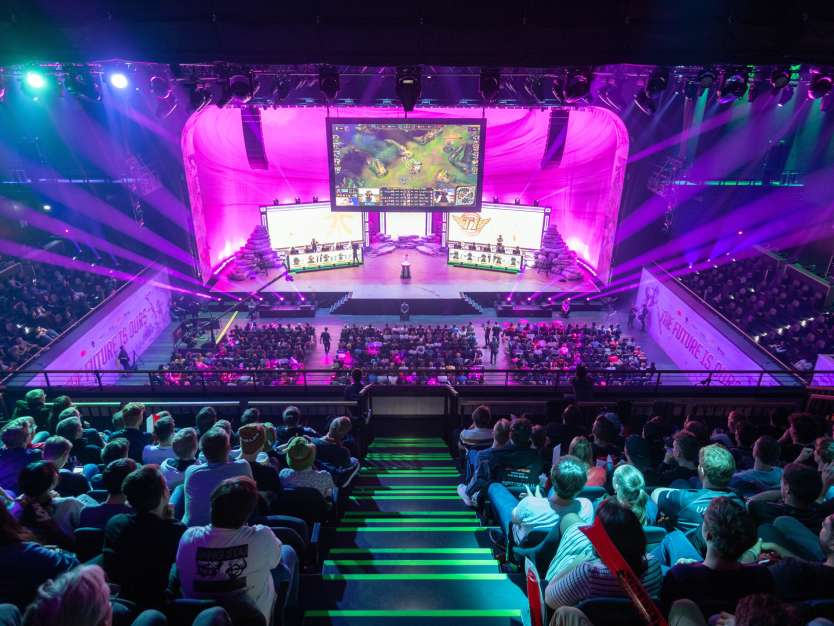
What started out as a traditional trade fair showcasing new game releases has evolved into one of the gaming world’s most significant cultural gathering points. Publishers, creators, communities, cosplayers, and brands come together here, both in person and digitally. With 357,000 visitors from 128 countries and 1,568 exhibitors, gamescom underscores its position as the world’s largest gaming convention. At the same time, over 1.1 billion video views demonstrate that its true reach extends far beyond the exhibition halls.
The evolution of gamescom mirrors the transformation of gaming culture as a whole. Following the product-and-community era and the creator-driven phase, the industry is now on the verge of a new era: the 'Participation Era'. Generating attention alone is no longer enough; visitors want to actively participate in and help shape the experience rather than merely consuming content. Consequently, brands must go beyond mere visibility to enable genuine engagement.
Creators and Communities Becoming Key Drivers of Success
One key finding is that creators today often have more influence over attention and relevance than brands themselves. At the same time, 61% of users prefer user-generated content to traditional brand content, and 69% of Gen Z create digital content themselves. This trend is fundamentally changing the role of brands at gamescom. Successful activations emerge when creators, the community, and the brand collaborate to create experiences and produce content that resonates far beyond the event itself.
Successful activations prioritise co-creation over mere reach, reflecting a significant shift in how trade fair success is measured. As highlighted in the latest report on gamescom by the gaming and esports agency BUILD A ROCKET, this shift is not something that will happen in the future - it is happening right now. While the focus used to be primarily on reach and visibility, interaction and participation are becoming increasingly important today. Success follows a progression from 'visibility' through 'participation' and 'sharing' to 'advocacy'. The goal is not just to attract visitors, but to transform them into active brand ambassadors. People who help shape an experience are more likely to share it with their friends, thereby generating a lasting impact. This fosters the organic growth of a genuine sense of community, which has a particularly positive effect on the brand's image.

“Gamescom impressively demonstrates how gaming culture, consumer behaviour and brand opportunities are evolving.”
Alexander Albrecht, Managing Director, Build A Rocket
Facts and figures
1.1 B
video views generated at gamescom in 2025
69 %
of Gen Z create its own content
63 %
of visitors come to gamescom with friends

Congstar Shows How Modern Brand Activations Work
Congstar’s best practice example from gamescom 2024 shows how successful participation strategies can look like. By combining creators, community activations, and interactive experiences, the brand achieved an impressive social media reach of 8.7 million contacts and generated around 7,000 active brand moments. Themes such as inclusion, diversity, and accessibility were also credibly integrated into the experience. This highlights the importance of authenticity and cultural relevance for brands operating in the gaming space.

The New Formula for Success
Participation is no longer just a means of activation; it is the strategy itself. This is arguably one of the most important insights emerging from current trade fair trends. Brands should create experiences that foster interaction, are easily shareable, and actively involve communities. Creators play a pivotal role in this, translating attention into relevance and motivating people to participate. Individual participants are actively engaged, feel part of the community and thus contribute organically to positive word-of-mouth marketing and sharing. In the future, the winners at gamescom will not be those with the largest booths, but those who create the most powerful community experiences.
Conclusion
Gamescom is evolving from a platform for brand visibility to a venue for shared experiences. This represents a shift in perspective for companies, moving away from asking ‘How many people saw us?’ to asking ‘How many people got involved, created content, and helped spread our story?’. Those who understand this principle can use Gamescom not just as a trade fair, but as a long-term platform for building a community and fostering brand loyalty.
Everything you need to know
Frequently Asked Questions
Sponsorship activation refers to the strategic efforts and initiatives undertaken by a sponsor to maximise the impact of their sponsorship investment. It involves bringing the sponsorship to life through various marketing and promotional activities to achieve specific business objectives.
Activation goes beyond placing a logo; it aims to engage the target audience, enhance brand visibility, and create a meaningful connection.
Activation strategies may include experiential marketing events, social media campaigns, contests, exclusive content, and collaborations with the sponsored entity. The goal is to leverage the association with the sponsored property in a way that resonates with the audience, builds brand loyalty, and delivers a positive and memorable brand experience.
Effective sponsorship activation enhances the overall value of the sponsorship, creating a win-win scenario for both the sponsor and the sponsored entity.
Sports partnerships can be defined as a new level of sports sponsorships: they represent a tighter-fitted collaboration between sports and businesses or brands.
Partnerships are less based on standard marketing benefits and more tailor-made on the company’s specific needs, and several company levels are involved in the sports project: from marketing to Research & Development, from production to management.
Partnerships tend to be focused on the improvement and development of specific products or services, and are usually long-term. They can be very effective on the customers and clients, who witness a true affinity with some of the world’s most winning properties. Partnerships are often multidimensional and multi-layered, with the development of new tech, as well as new products and the marketing that comes with them.
The TV perimeter boards in the stadium can run your advertisement in different rotations. A range of displays can be used for your advertisement according to the mode. The length of each rotation is typically 30 seconds. The LED perimeter video board technology offers you diverse and versatile types of animation, which can be regularly adapted to your communication campaign using state-of-the-art technology.
Full rotation
Only one sponsor is visible on the entire perimeter board area. This type of rotation creates an uncluttered, homogeneous image with high contact intensity and long communication opportunities.
4:4 rotation
The TV perimeter board area is divided into four sections, and four sponsors are visible within a single rotation. This type of rotation generates visibility and contacts with an optimal combination of quality and quantity.
2:2 rotation
The TV perimeter board area is divided into four sections, with two sponsors each occupying two sections in a single rotation. This type of rotation also generates visibility and contacts with an optimal combination of quality and quantity.
Multisession
With this type of display, up to 14 sponsors are featured in perimeter board sections of equal size at the same time. The focus is on the brand’s logo or slogan. This rotation guarantees high contact figures as each sponsor is visible in every sequence.
Social media plays a pivotal role in sports marketing, providing a dynamic and interactive platform to engage with fans, build brand presence, and amplify the reach of sports entities. The significance of various platforms, including Facebook, X (formerly Twitter), Instagram, TikTok, and emerging Web 3 formats, is immense:
Fan Engagement and Community Building
Social media platforms facilitate direct interactions between sports entities and fans, fostering a sense of community and engagement. Fans can share experiences, express opinions, and connect with their favourite teams, athletes, and events.
Real-time Updates and News Distribution
Platforms like X (formerly Twitter) serve as real-time news feeds, allowing sports organisations to share updates, live scores, and breaking news instantly. This immediacy enhances the fan experience and keeps them informed.
Visual Storytelling on Instagram
Instagram's visual-centric nature is ideal for sports marketing. Teams and athletes use it to share behind-the-scenes content, highlight moments, and create visually appealing narratives that resonate with fans.
Short-form Content on TikTok
TikTok's popularity for short-form, engaging content is harnessed by sports entities to showcase highlights, challenges, and entertaining snippets, appealing to a younger and diverse audience.
Brand Visibility and Sponsorship Activation
Brands leverage social media to activate sponsorships, promoting partnerships with teams or athletes through branded content, challenges, and interactive campaigns. This enhances brand visibility and aligns with the interests of the sports community.
Emergence of Web 3 Platforms
Web 3 platforms, driven by blockchain and decentralised technologies, are gaining traction. These platforms offer new possibilities for fan engagement, tokenized assets, and ownership models, allowing fans to have a more direct and participatory role in the sports ecosystem.
Global Reach and Accessibility
Social media breaks down geographical barriers, enabling sports organisations to reach a global audience. Live streaming, highlights, and interactive features ensure accessibility for fans worldwide.
Influencer Marketing and Athlete Branding
Athletes and sports influencers utilise social media to build personal brands, connect with fans, and attract sponsorships. Brands leverage athlete influencers to reach specific demographics and enhance their marketing efforts.
Fan-generated Content
Social media encourages fan-generated content, turning fans into brand ambassadors. User-generated content, such as fan art, reactions, and challenges, contributes to a vibrant sports community.
Data-driven Insights
Platforms provide valuable analytics and data, allowing sports marketers to understand audience behaviour, tailor content strategies, and measure the impact of campaigns.
Overall, social media platforms play a multifaceted role in sports marketing, enabling real-time communication, fostering community, and creating innovative ways to connect with fans and consumers. The evolution of platforms, including the rise of Web 3 technologies, continues to shape the future of sports marketing in the digital age.
In immersive gaming, brands are received much more intensively and authentically. On Roblox, players spend up to 30 times more time in a branded experience compared to a social media advertising post.
